
April 27, 2026 Branded Blog- Why a Business Flywheel Won’t Work Without Brand Strategy
Why a Business Flywheel Won’t Work Without Brand Strategy
The Flywheel Makes Sense—Until It Doesn’t
Over the last 10-20 years, the business flywheel has become one of the most talked-about growth models in marketing.
A business flywheel is a growth model where each positive customer interaction builds momentum—turning attraction, engagement, and experience into repeat business and referrals over time. In theory, it’s a powerful model. But without a clear brand strategy behind it, that momentum is difficult to build, and even harder to sustain.
At a high level, it’s compelling:
- Attract customers
- Engage them
- Deliver a great experience
- Build momentum over time
And in theory, that momentum compounds. But over the years, I’ve seen a consistent issue with how organizations try to apply it. They focus on the flywheel, before they’ve built the foundation that makes it work effectively.
The Problem: Activity Without Alignment
Instead of starting with clarity, many organizations jump straight into:
- campaigns
- content
- automation
- customer experience initiatives
They’re investing in motion—without direction.
I’ve seen teams pour resources into paid media, content, and marketing technology expecting momentum… only to realize their messaging wasn’t clear enough to convert in the first place.
The result? Plenty of activity—but very little traction.
| |
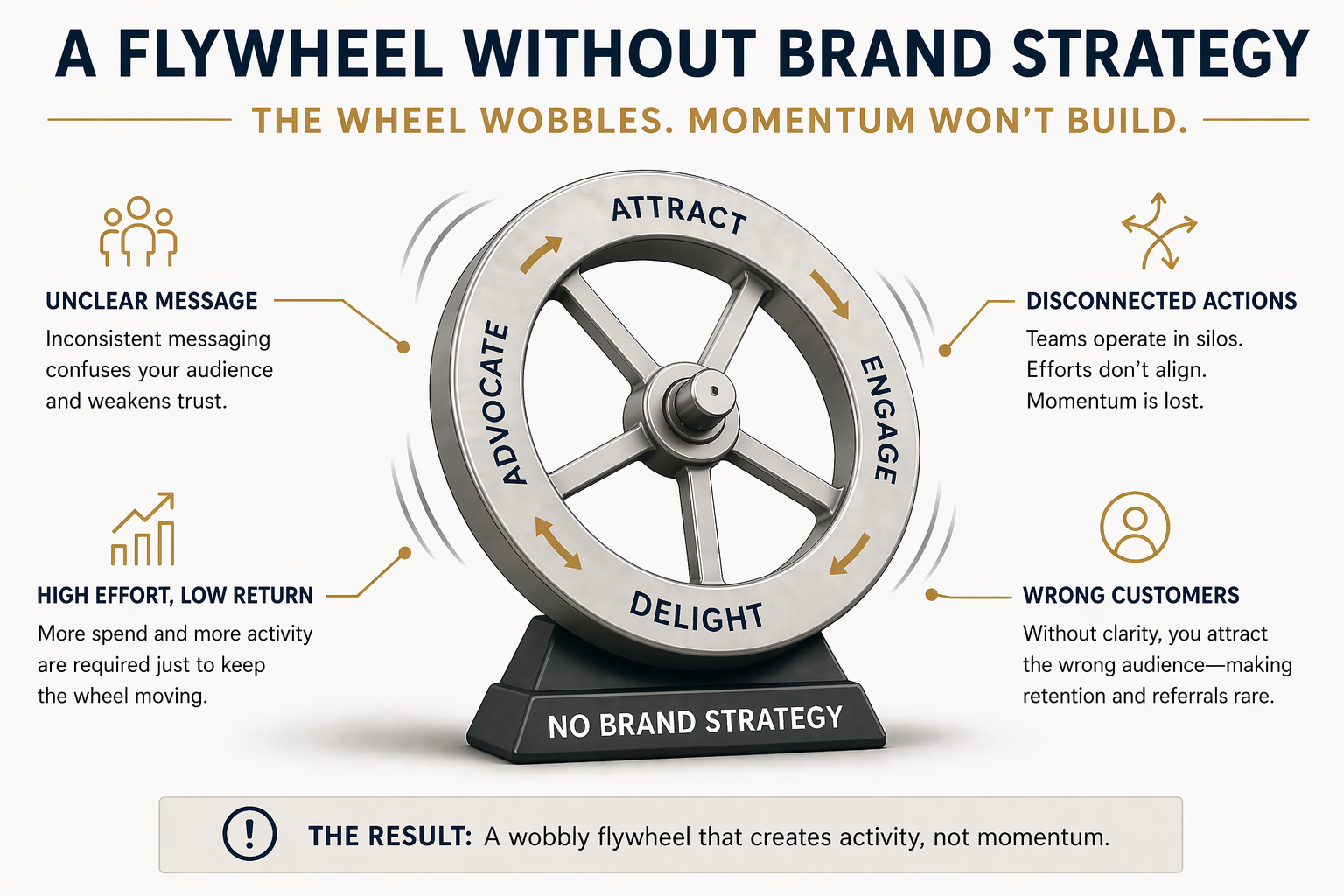
Why a Flywheel Without Strategy Breaks Down
1. It Becomes Expensive to Maintain
Without clear positioning, growth depends on constant input:
- paid ads
- promotions
- manual effort
Instead of momentum, you get dependency. You’re pushing the wheel—rather than letting it turn.
2. There’s No Clear Direction
A flywheel only works when energy is applied consistently in the same direction. Without applying brand strategy that serves to guide direction:
- messaging shifts
- campaigns feel disconnected
- teams operate in silos
The flywheel doesn’t spin efficiently. It wobbles.
3. You Attract the Wrong Customers
Without clarity around your audience and a strategic value proposition:
- targeting becomes too broad
- messaging becomes diluted
- leads are lower quality
And a flywheel depends on retention and loyalty—not just acquisition. If the wrong customers are entering the system, they’re not likely to become loyal brand ambassadors and the entire model breaks down.
4. “Delight” Becomes Harder to Deliver
One of the core ideas of the business/marketing flywheel is customer experience. But experience starts with expectation. And expectation is set by your brand. If your positioning and messaging are not clear, it becomes difficult to consistently deliver on a promise. Because that promise was never clearly defined.
In Practice: What This Looks Like
I’ve worked with organizations across retail, franchise systems, healthcare, and professional and home services that invested heavily in growth tactics.
They had:
- strong teams
- solid budgets
- the right tools
But before we built a clear brand strategy, they struggled with:
- inconsistent messaging
- inefficient spend
- lack of momentum
The issue wasn’t effort. It was alignment.
Why Brand Strategy Comes First
Before a flywheel can work effectively, three strategic things need to be clearly defined:
1. Who You Serve (Audience + Value Proposition)
Who are you trying to reach, and what value and solutions do you provide?
Trying to appeal to everyone weakens your impact.
2. What You Stand For (Positioning)
Why should someone choose you?
If that’s not clear, your marketing won’t connect.
3. What You Say (Messaging)
Consistency builds awareness and recognition.
Recognition builds trust.
And trust is what fuels momentum.
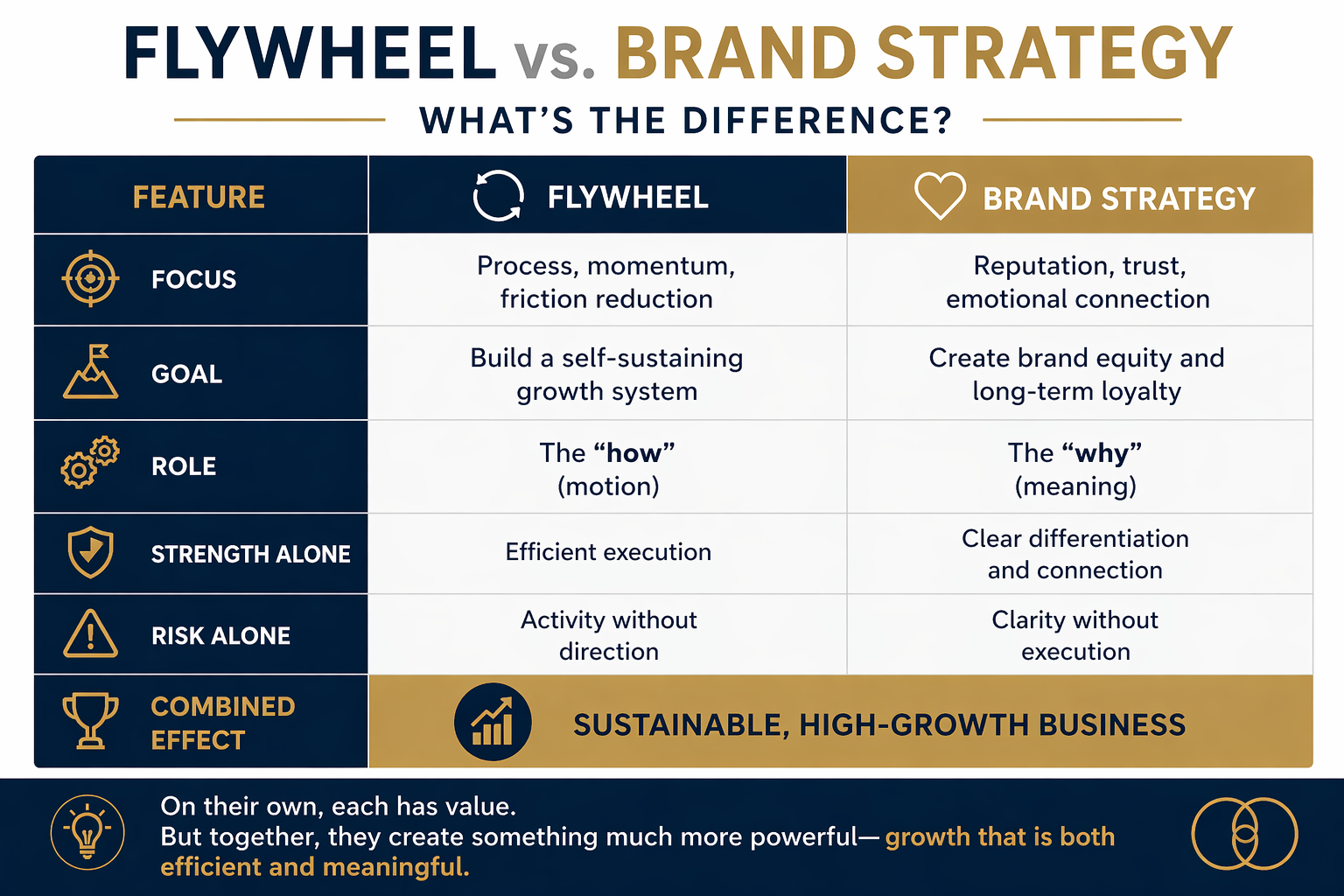
The Right Sequence for Sustainable Growth
Instead of jumping straight into a flywheel, a more effective approach looks like this:
Step 1: Define Your Audience and Value Proposition
Clarify who you serve and what you offer.
Step 2: Build a Clear Brand Strategy
Spend time on positioning, reasons to believe, differentiation, and a compelling story.
Step 3: Align Your Marketing
Develop messaging, campaigns, and channels that work together across an integrated plan.
Step 4: Then Build the Flywheel
Now your system has direction, and can build real momentum.
| |
A Better Way to Think About It
The flywheel is not the strategy. It’s the result of a well-defined strategy.
Your brand gives it direction.
Your messaging gives it energy.
Your strategy keeps it moving.
Final Thought
A flywheel can be a powerful model. But without a clear brand foundation, you’re not building momentum.
You’re just pushing harder.
 Reach Out to Tim Hewitt to Discuss Your Brand Strategy Today.