
October 15, 2026 Branded Blog - Beyond End-of-Life Care: How Brand Storytelling Helped Transform Texas Hospice
Beyond End-of-Life Care: How Brand Storytelling Helped Transform Texas Hospice
An authentic story of compassionate care inspired a brand refresh, the “Love Lives Here” campaign, and a foundation for business growth.
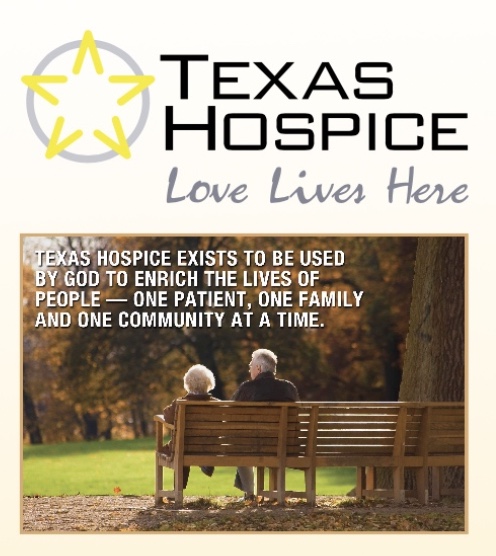
When people hear the word hospice, their first thoughts are often about death, loss and the difficult decisions families face when a loved one is nearing the end of life.
Those emotions are understandable. But when I began working with Texas Hospice in 2010, I discovered something that changed my perspective on end-of-life care. Behind the clinical services was an organization filled with caregivers who approached their work with extraordinary compassion, dignity and love.
That discovery became the foundation for one of the most meaningful healthcare branding projects I've had the opportunity to lead.
What began as a request for a new website and marketing plan evolved into a comprehensive brand refresh that helped Texas Hospice communicate what made its care distinctive, strengthen its presence in the marketplace and support expansion into new Texas markets.
It also reinforced something I've believed throughout my career: sometimes the most powerful brand story isn't one you create. It's one you uncover.
A Website Project That Became a Brand Strategy
During the early years of Circle H Branding Company, I was approached by Texas Hospice, a
Fort Worth-based hospice provider, to develop a new website and marketing strategy to help the organization grow.
The initial assignment was straightforward. The company needed a stronger digital presence, updated marketing materials and a more coordinated approach to reaching prospective patients, families and referral sources.
But before developing the website or launching a campaign, I wanted to better understand what made the organization different and why that difference mattered to the people it served.
I began by interviewing leadership, employees and families of patients to learn more about the company's culture, philosophy of care and the experiences of those closest to the organization.
What emerged from those conversations changed the direction of the project.
| |
Discovering the Story Behind the Brand

The compassion Texas Hospice caregivers demonstrated toward their patients was extraordinary. These weren't simply healthcare professionals fulfilling clinical responsibilities. They were people who genuinely cared about the individuals and families they served, often developing deeply personal relationships during some of life's most difficult moments.
Many of the employees were Christians, and their faith influenced how they approached caregiving. The organization's multidisciplinary team was available around the clock, guided by a commitment to provide responsive, high-quality end-of-life care while demonstrating the love of Christ through their work.
That philosophy extended beyond the patients themselves. Families navigating difficult decisions and preparing for the loss of someone they loved also received encouragement, guidance and emotional support.
Hospice is often associated with dying, but what I witnessed was an organization focused on helping people live their remaining days with dignity, comfort and compassion.
I remember being genuinely moved by those conversations. There was an authenticity to the organization's culture that no advertising campaign could manufacture.
Yet the brand wasn't fully communicating it.
Texas Hospice had a powerful story, but the outside world wasn't necessarily seeing what made the organization distinctive. That became the opportunity to build a brand position around something genuinely meaningful.
| |
Finding the Brand Positioning: Love Lives Here
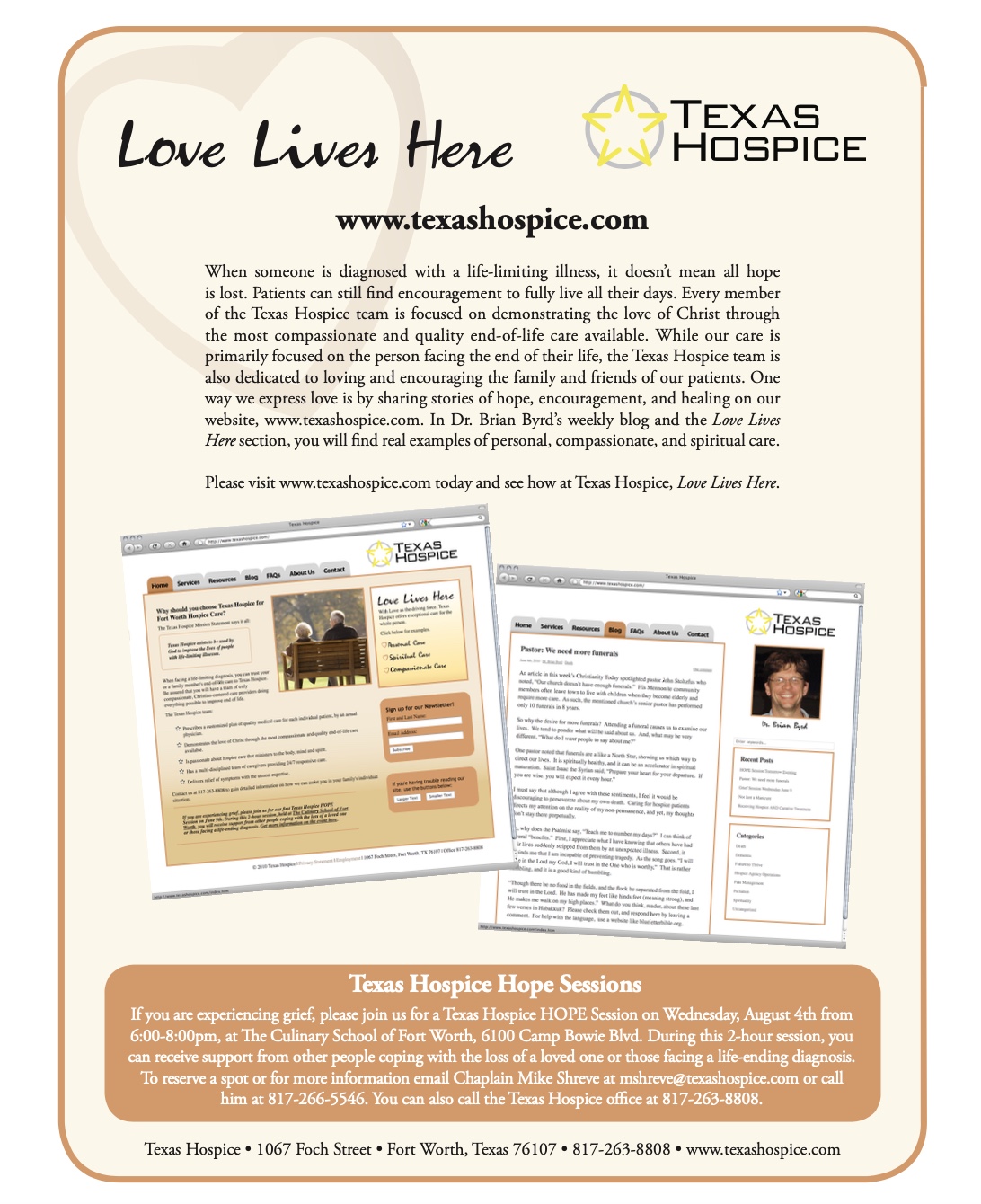
Through the discovery and brand development process, I began shaping a positioning strategy that would bring the organization's compassionate approach to care into focus.
The goal wasn't to minimize the realities of hospice. Instead, I wanted to shift the conversation toward the dignity, quality of life and genuine love that Texas Hospice provided to patients and their families.
That thinking led to three simple words:
Love Lives Here.
The tagline captured what I had experienced firsthand. It reflected the compassion of the caregivers, the organization's Christian foundation and its belief that meaningful living and human dignity remain important throughout every stage of life.
It was also a message that could connect with families regardless of their religious backgrounds. While grounded in the organization's faith-informed culture, the central promise was universally human.
We carried that positioning into a refreshed visual identity that preserved the organization's Texas heritage while introducing a warmer, more approachable presentation.
The existing logo incorporated a star representing its Texas roots, which we intentionally retained. The Love Lives Here tagline was introduced in a softer, handwritten-style script that brought a more personal quality to the identity. We also incorporated a heart as a supporting brand element throughout the website, newsletter, advertising and other communications.
These were relatively subtle creative decisions, but they were strategically important. The objective wasn't simply to modernize the logo. It was to make the organization's identity more closely reflect the care people actually experienced.
We also considered the needs of family members, particularly women who were often making or influencing care decisions for aging parents and loved ones. The brand needed to communicate professionalism and credibility while also feeling reassuring, compassionate and deeply human.
Internally, the positioning gave leadership and employees a clearer way to articulate the organization's philosophy of care and reinforce it through communications and training. Externally, it helped families and referral audiences understand what made Texas Hospice different.
For me, that was the strength of the work. We weren't inventing a brand promise. We were giving an authentic one a clearer voice and identity.
Bringing the Brand Story to Life
Once the positioning and identity were established, we launched an integrated marketing campaign built around Love Lives Here.
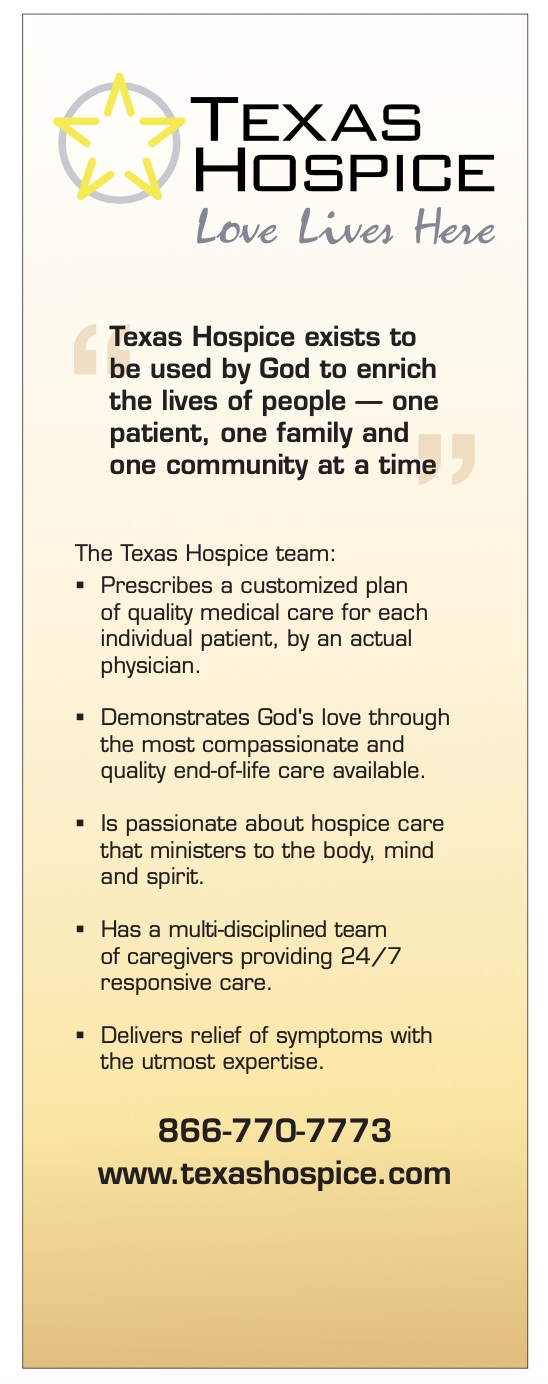
The work included a redesigned website, updated business and print collateral, outdoor billboards, radio advertising, digital marketing and social media campaigns. Each channel had a different role, but all reinforced the same central message.
The website became an important destination for families researching hospice care and evaluating potential providers. We wanted the experience to be informative and reassuring, helping people better understand both the services Texas Hospice provided and the compassionate philosophy behind them.
Content and storytelling were also important parts of the strategy. We introduced a blog on the new website, along with a Love Lives Here section that shared stories of hope, encouragement and the organization's approach to personal and spiritual care.
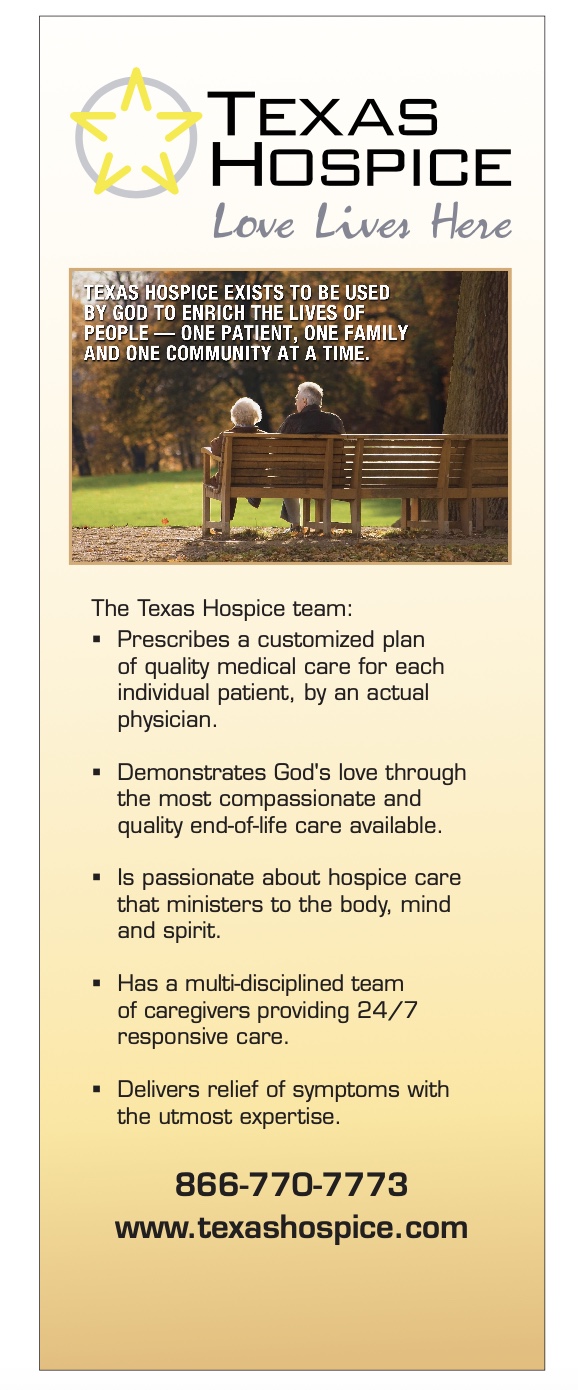
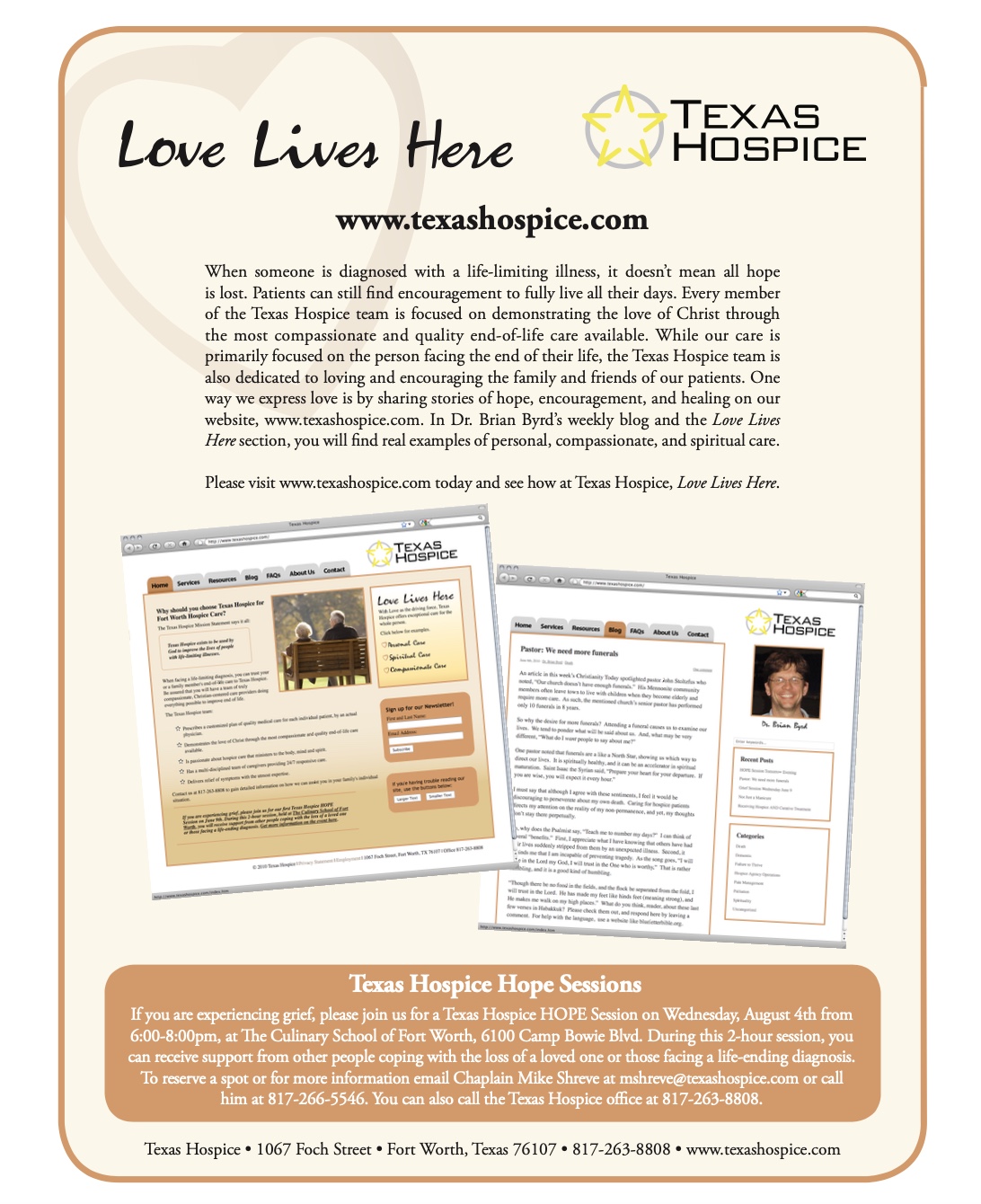
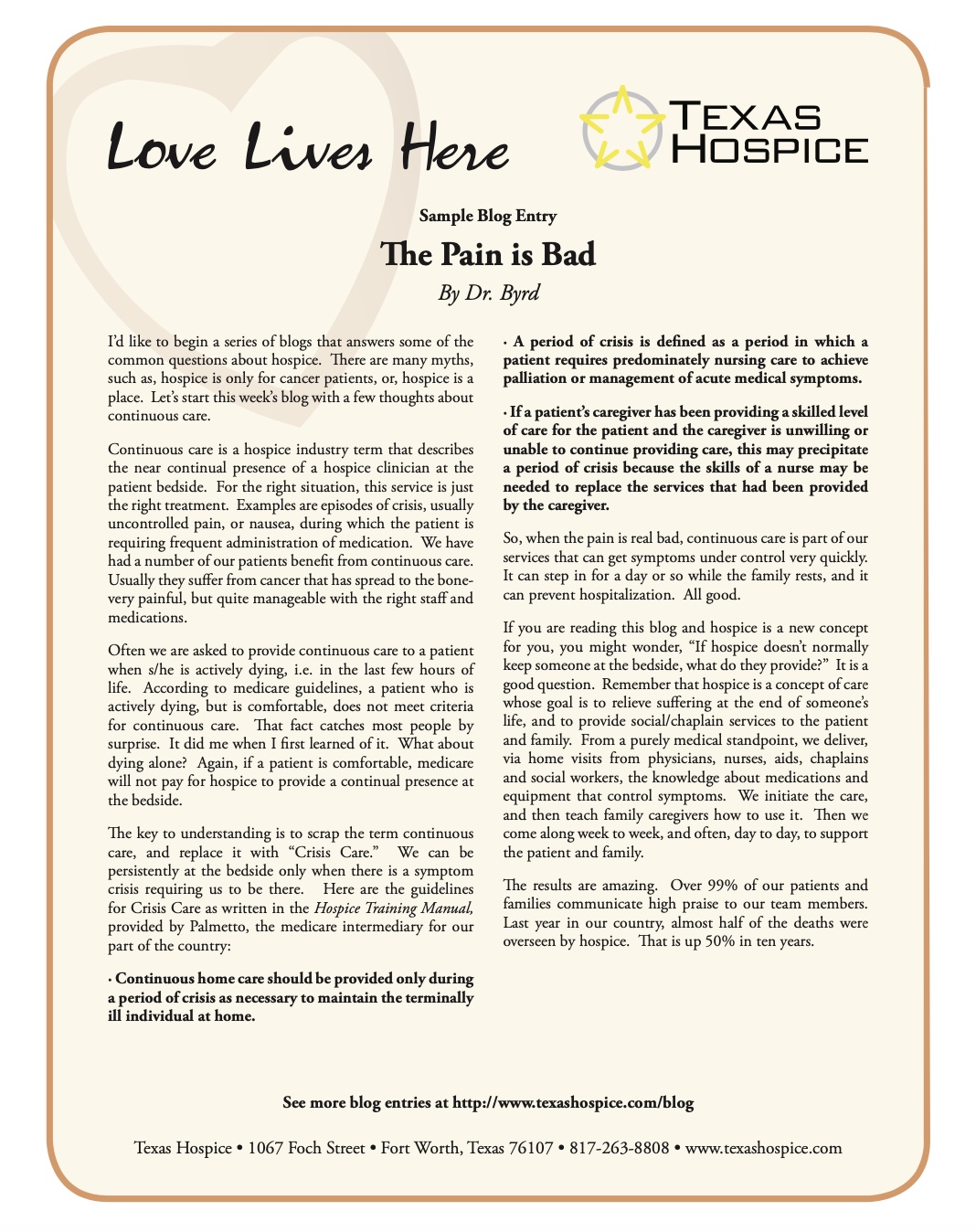
One promotional flyer we developed in 2010 illustrates how these elements worked together. The front introduced the refreshed brand identity, website and blog, while the reverse featured an article by Dr. Brian Byrd. It connected traditional print communications with the organization's growing digital content presence.
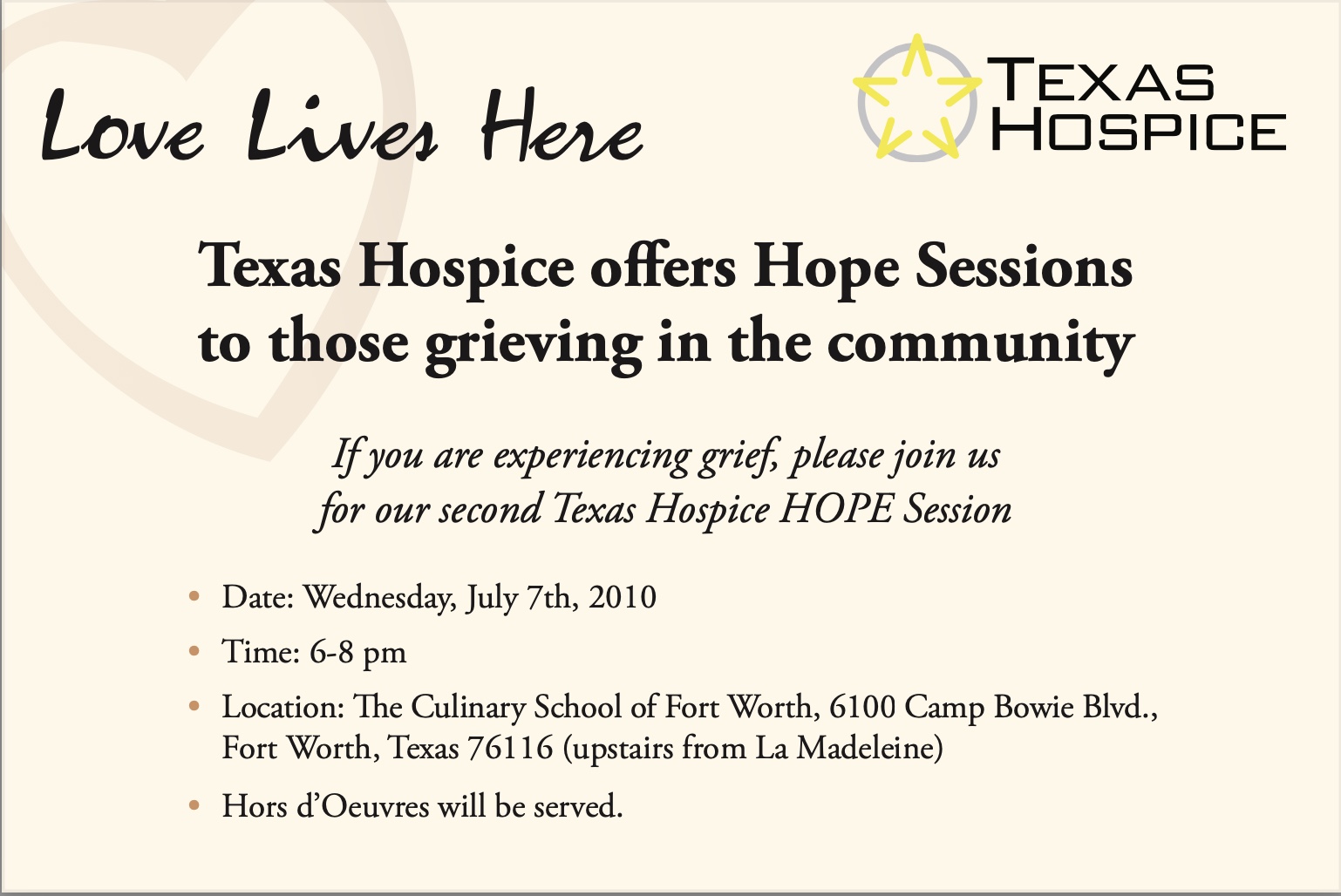
The flyer also promoted Texas Hospice HOPE Sessions, which offered grief support and encouragement to people coping with loss or facing a life-ending diagnosis. These sessions reinforced that the organization's commitment to compassionate care extended beyond patients to families and the community.
Meanwhile, radio, outdoor and digital advertising helped build awareness and recognition in the markets Texas Hospice served.
The consistency across those touchpoints was intentional. Whether someone encountered the brand on a billboard, received a flyer, visited the website or spoke with a caregiver, we wanted the experience to reinforce the same promise.
This is where brand storytelling becomes more than advertising. A strong story gives marketing channels a shared purpose and helps build recognition, familiarity and trust over time.
And in healthcare, that trust can be especially important. Families may encounter a healthcare brand long before they need its services. When that moment comes, you want your organization to be one they already know and trust.

A Stronger Brand and New Opportunities for Growth

At the time of the rebranding, Texas Hospice was based in Fort Worth. Following the launch, the organization expanded its care into Dallas and subsequently into San Antonio and Austin.
The refreshed brand provided a clearer identity and a more consistent platform for communicating the organization's value as it entered new markets. Rather than competing solely on the clinical services that hospice providers generally offer, Texas Hospice could articulate a distinctive promise centered on compassionate, faith-informed care.
The campaign was well received by leadership and helped support the company's growth during the years that followed.
In 2013, Texas Hospice was acquired by a larger hospice organization. Its founder later attributed an important part of the company's growth and eventual acquisition to the rebranding and marketing work we had undertaken.
That remains one of the most meaningful endorsements I've received from a client.
Of course, business growth and acquisitions are influenced by many factors, including leadership, operational performance, market conditions and quality of care. Marketing alone doesn't create those outcomes. But strong brand positioning can help an organization communicate its value, differentiate itself and establish a foundation that supports growth.
That's what we set out to accomplish with Texas Hospice.
The Power of an Authentic Brand Story
More than a decade later, the Love Lives Here campaign remains one of the projects I'm most proud of.
Not simply because the organization grew, but because the work captured something genuinely meaningful about the people providing the care.
Looking back, I often think about how differently the project might have turned out if we had approached it strictly as a website assignment. We could have produced an attractive website and a perfectly acceptable marketing campaign, but we would have missed the story that made the organization special.
By taking the time to listen to leadership, caregivers and families, we uncovered a meaningful point of differentiation already deeply embedded in the company's culture. That insight shaped the brand positioning, visual identity, messaging and ultimately the marketing strategy.
It's a lesson that continues to influence how I approach brand strategy and storytelling today, especially in healthcare, where decisions are often deeply personal and emotional.
The strongest brands aren't built by inventing a story people want to hear. They're built by discovering what makes an organization truly distinctive and telling that story in a way people understand, connect with and remember.
For Texas Hospice, that story was simple.
Love Lives Here.
| |
Healthcare Stories from Circle H is a series exploring real-world brand strategy, storytelling and marketing communications projects across healthcare, from pediatric and preventive care to family medicine, specialty medicine and hospice.
About Circle H Branding Company
Circle H Branding Company helps organizations clarify their positioning, uncover their authentic brand stories and develop marketing strategies that connect with customers and support business growth.
Strategic Branding. Compelling Stories. Smarter Marketing.
Reach out to Tim Hewitt at  tim.hewitt@circlehbranding.com.